Have you ever felt the need to step away from the noise of life and spend more time with God? Maybe your heart feels heavy. Maybe you need wisdom, peace, or direction. At times like these, many Christians turn to fasting and prayer.
But what is the fasting in the Bible meaning?
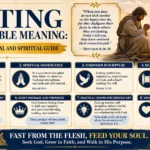
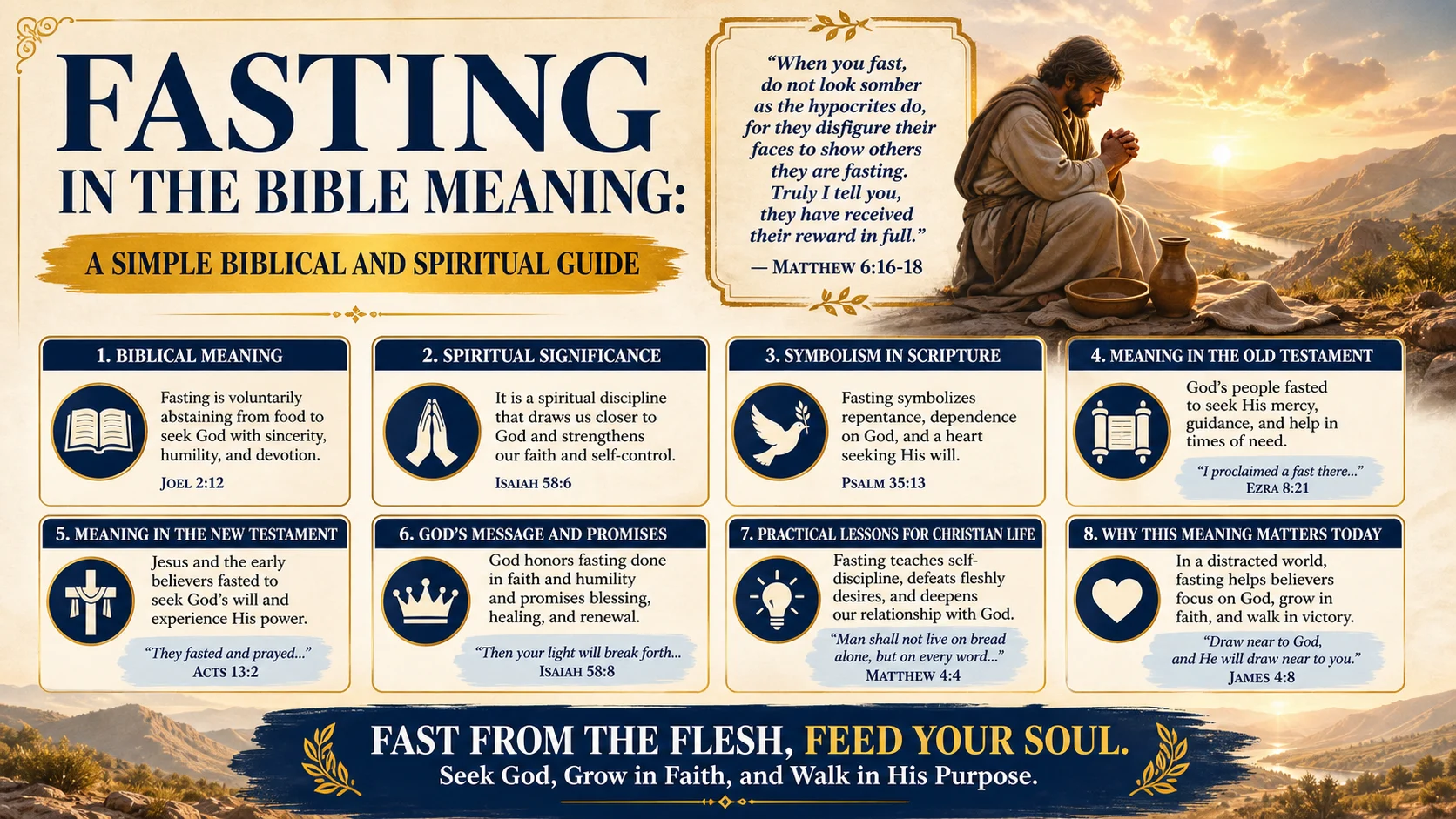
In the Bible, fasting is more than simply going without food. It is a time when a person sets aside normal comforts to seek God with a focused heart. It can be a time of prayer, repentance, worship, and deeper trust in the Lord.
People in the Bible fasted during times of need, sorrow, danger, repentance, and spiritual preparation. Jesus also fasted before beginning His public ministry. His example shows that fasting can help us draw closer to God.
Fasting does not force God to answer a prayer. It is not a way to earn His love. Instead, it helps us slow down, turn our hearts toward God, and depend on Him.
So, what does the Bible really teach about fasting? Let us explore its meaning, spiritual symbolism, Bible verses, and lessons for everyday Christian life.
Biblical Meaning of Fasting in the Bible
The main biblical meaning of fasting is seeking God with a humble and focused heart.
Fasting often means choosing to go without food for a set time while giving more attention to prayer and God. In Scripture, fasting is connected with humility, repentance, prayer, dependence, and spiritual focus.
1. Fasting Means Seeking God
One reason people fasted in the Bible was to seek God during important moments.
In 2 Chronicles 20:3, King Jehoshaphat became afraid when enemies came against Judah. He called the people together and proclaimed a fast. They turned to God for help.
This shows an important lesson: fasting can express our dependence on God.
When we do not know what to do, we can pray, fast, and place our trust in Him.
2. Fasting Can Show Repentance
Fasting is also linked with turning away from sin.
In Joel 2:12, God calls His people to return to Him with all their hearts, with fasting, weeping, and mourning.
The message is powerful. True fasting is not only about the body. It is about the heart.
God wants sincere repentance, not an outward religious act. A person can skip food and still have a heart far from God.
This is why Isaiah 58 is so important. God challenged His people because their fasting had become empty. He wanted their worship to lead to justice, mercy, kindness, and care for others.
3. Fasting Can Help Us Focus on Prayer
Fasting can create a quiet space for prayer.
When we step away from something that normally takes our attention, we can use that time to seek God. This does not make prayer more powerful because we are hungry. Instead, it reminds us that God is our true source of strength.
In Ezra 8:21, Ezra called a fast so the people could humble themselves before God and ask Him for protection.
This gives fasting a beautiful spiritual picture: “Lord, I need You. Guide me and help me.”
4. Jesus Also Fasted
One of the clearest examples is found in Matthew 4:1–2. Jesus fasted for forty days and forty nights in the wilderness before His ministry began.
His fast was followed by a time of temptation.
Jesus answered temptation with God’s Word. His example reminds Christians that spiritual strength is not found in food, comfort, or human power alone.
However, Christians should not try to copy Jesus’ forty-day fast without careful consideration. Biblical fasting can take different forms, and physical health matters.
5. Fasting Is Not a Way to Control God
This is one of the most important lessons.
Fasting is not a spiritual bargain. We do not fast so God must give us what we want.
God is not controlled by our hunger.
Instead, fasting helps us surrender our desires to Him. It can change our hearts even when our circumstances do not change.
That is why fasting is closely connected with faith and trust.
Spiritual Significance and Symbolism of Fasting
The spiritual symbolism of fasting points to surrender, humility, hunger for God, and transformation.
Think of it this way: physical hunger can remind us of a deeper hunger within the soul.
Jesus said in Matthew 4:4, “Man shall not live by bread alone, but by every word that proceeds from the mouth of God.”
The lesson is simple. Food is important, but our relationship with God is even more important.
Fasting Symbolizes Surrender
Sometimes we hold tightly to our plans. We want a certain answer, result, or future.
Fasting can become a prayer that says, “God, I trust You more than I trust my own plans.”
Fasting Symbolizes Spiritual Hunger
A Christian may fast when longing for God’s guidance, presence, or wisdom.
This does not mean God is far away. Rather, fasting can help us become more aware of His presence.
Fasting Can Lead to Transformation
Fasting may reveal things inside us that we normally ignore. It can expose impatience, fear, pride, or unhealthy desires.
With prayer and God’s Word, this can become an opportunity for growth.
For example, someone facing a major decision might spend a day fasting and praying. They may not receive an instant answer, but they may gain greater peace and a clearer heart.
That is part of the spiritual message of fasting: sometimes God changes our hearts before He changes our situation.
Biblical Interpretations of Fasting in Dreams or Real Life
If you dream about fasting or find yourself fasting in real life, do not assume it is automatically a divine message.
The Bible does not give one fixed meaning for every dream about fasting. Dream interpretation should always be tested against Scripture and prayer.
If fasting in a dream feels peaceful, it may remind you of seeking God, surrender, or spiritual focus.
If the dream feels fearful or confusing, it may simply reflect stress, personal thoughts, or concerns in your daily life.
In real life, a desire to fast may encourage you to spend more time in prayer and God’s Word.
The safest Christian approach is simple: pray for wisdom, read Scripture, and do not build major decisions on a dream alone.
God’s guidance will never contradict His Word.
Practical Lessons & Faith Insights
Fasting can teach us to slow down, pray deeply, and trust God. If you feel led to fast, begin with a humble heart. Pray about your purpose and spend time reading Scripture. Remember that fasting is not about impressing God. It is about drawing near to Him and surrendering your heart.
5 FAQs About Fasting in the Bible
1. What is the main meaning of fasting in the Bible?
Fasting means setting aside food or another normal comfort for a time to seek God through prayer, humility, worship, or repentance. The focus is on God, not hunger.
2. Why did people fast in the Bible?
People fasted for different reasons. They sought God’s help, showed repentance, prepared for important moments, mourned, and focused on prayer. Examples include Ezra 8:21, Joel 2:12, and Esther 4:16.
3. Does fasting make God answer prayers?
No. Fasting does not force God to answer a prayer in a certain way. It is an act of faith and surrender. It helps us place our needs before God while trusting His wisdom and timing.
4. What did Jesus say about fasting?
In Matthew 6:16–18, Jesus taught His followers not to fast to gain attention from people. He encouraged a sincere and humble heart. Fasting should be about seeking God, not showing others how spiritual we are.
5. Can Christians fast today?
Yes. Christians may choose to fast as part of prayer and spiritual discipline. However, fasting should be practiced wisely. People with medical needs, children, pregnant people, or anyone unsure about fasting should seek appropriate medical advice before avoiding food.
Conclusion
The fasting in the Bible meaning is deeply connected to prayer, humility, surrender, repentance, and trust in God. Biblical fasting is not a way to control God. It is a way to quiet our hearts and seek Him more deeply.
When life feels uncertain, remember this: you do not have to carry everything alone. Bring your heart to God, seek His Word, and trust His timing. As you seek Him, may your faith grow stronger and your heart become filled with His peace.
Nephilites Bible Meaning: What the Bible Says About the Nephilim and Their Spiritual Message

I am a professional content writer with a passion for the Bible, Christian faith, prayer, and spiritual growth. I specialize in creating well-researched, insightful, and reader-friendly articles on biblical teachings, Bible verses, prayer, faith, and Christian living. My goal is to make biblical topics easy to understand while providing meaningful and encouraging content that helps readers grow in their faith and strengthen their relationship with God.